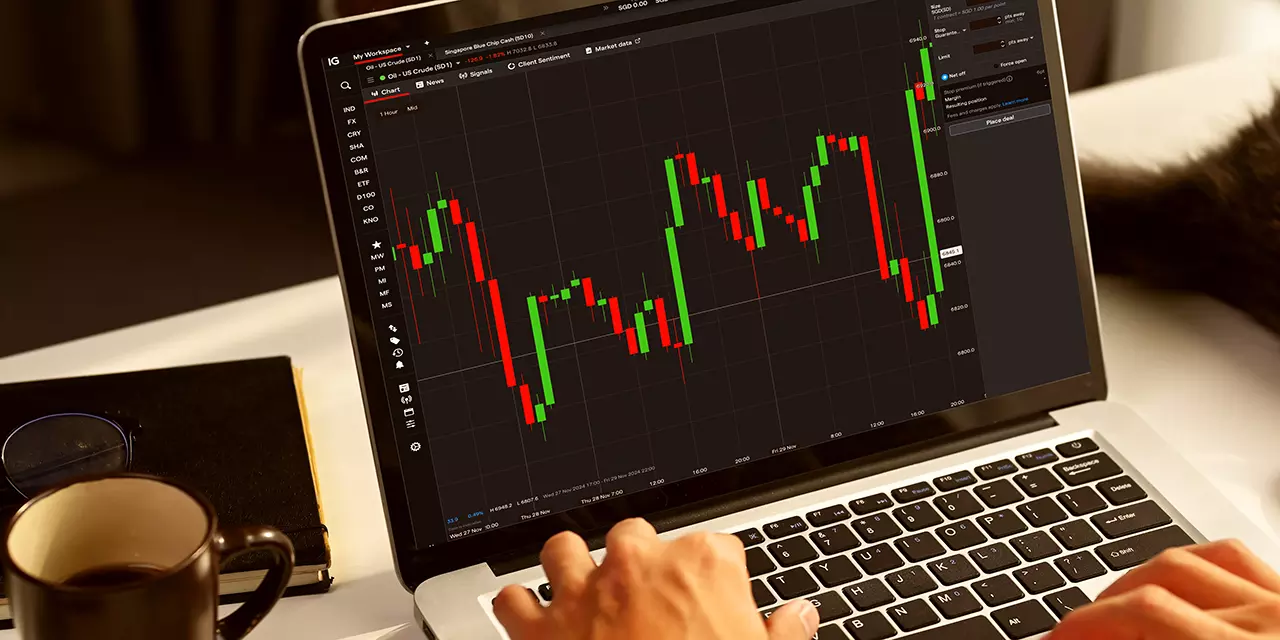
If you've worked in the world of futures trading at all, you're aware that not all trading platforms are the same. Some are designed for velocity—every tick, every millisecond counts. Others are more focused on analysis, testing strategy, and the type of deliberate trade setup that is the hallmark of swing traders. Add in futures prop firms to the mix, and platform selection takes on an even greater significance. Why? Because your success at scaling up within a prop environment so much depends on your ability to execute and manage trades on the instruments you're provided.
So let's get into it. We'll contrast the top futures trading platforms for two very distinct types of traders: scalpers and swing traders. And by the end, you'll understand which platform suits your style—and how that decision can make or break your prop trading career.
Scalpers and Swing Traders: Two Worlds, Shared Market
Scalpers are the trading speed demons. They're in and out of positions in seconds or minutes, piling up small profits that hopefully compound big over the long haul. Accuracy and ultrasmart execution are their stock in trade. Even a split-second pause or clumsy chart can nibble away at their edge.
Swing traders, conversely, are the willing waiters. They're okay with waiting out positions for a day or two or three weeks, if need be, anticipating larger movements to materialize. They don't require nanosecond order execution, but they do require deep analysis tools, risk tools, and the ability to zoom out from time to time and see the larger picture.
Two totally different mindsets, right? But both need platforms that line up with their goals. Let’s look at what makes a platform “the best” for each type of trader.
What Scalpers Need in a Futures Trading Platform
Scalpers live or die by execution speed. There’s just no way around it. If you’re scalping on a slow, laggy platform, you’re toast. Here are the must-haves for scalpers:
- Ultra-Low Latency – Orders must hit the market in real-time. Half a second can cause a loss or a win.
- DOM (Depth of Market) – Scalpers depend greatly on observing market depth, order flow, and levels of liquidity. A good DOM tool is not an option.
- Hotkeys and One-Click Trading – You cannot waste time verifying orders three times. Scalpers require streamlined execution.
- Clean, Simple Charts – Cluttered charts are the bane of quick decision-making. Scalpers want clarity, not chaos.
- Stability – Crashing, freezing, or disconnection in the middle of a scalp trade can knock you out in seconds. They must be reliable.
Now look at what swing traders require, which is practically the opposite.
What Swing Traders Need in a Futures Trading Platform
Swing traders are considering longer-term trades, so they care less about if their order executes in 30ms or 200ms. They prefer instruments that assist them in analyzing and handling trades well.
- Advanced Charting – They require multiple time frame analysis, drawing tools, and indicators to identify trends and setups.
- Backtesting Capabilities – Swing traders enjoy trying out strategies on historical data to determine what works before risking actual money.
- News and Market Data Integration – Because they stay in for longer, macro events are important. Having news feeds and economic calendars built-in is a huge plus.
- Position Management – Swing traders tend to scale into a position or cover multiple contracts. Platforms that facilitate ease in this regard are favored.
- Customizable Layouts – Swing traders tend to spend a lot of time analyzing. Having the ability to design a workspace that suits their work style is crucial.
So, keeping those needs in mind, let's take the best futures trading platforms by style.
The Best Futures Trading Platforms for Scalpers
NinjaTrader
NinjaTrader is a favorite among futures scalpers for a reason. Its Depth of Market (DOM) tool is one of the cleanest in the business, and its ultra-low latency execution makes it perfect for fast-paced trading. Add in hotkeys, advanced order types, and the ability to customize execution settings, and you’ve got a scalper’s dream setup.
Pros: Lightning-fast execution, powerful DOM, great for prop firm integration.
Cons: The learning curve is steep, and certain features are tied to paid plans.
CQG
CQG ain't pretty, but boy is it consistent. It's renowned for its institutional-quality execution and ultra-solid data feeds. If your method demands clean order flow data and solid execution, CQG gets the job done. Several futures prop firms actually utilize CQG as the basis of their execution.
Pros: Stable, pro-grade, great order routing.
Cons: Less for beginners, can be expensive.
The Best Swing Trading Platforms for Futures
TradingView
Swing traders adore TradingView for its gorgeous, customizable charts and vast collection of indicators. Although it's not a powerhouse of execution like NinjaTrader, its analysis capabilities are unmatched. And to top it off, numerous brokers now offer TradingView integration for order direct entry.
Pros: Best charting available, cloud-based, simple to share ideas.
Cons: Execution is not as fast for scalping.
MetaTrader 5 (MT5)
While more typical in forex, MT5 is becoming widely available for futures as well. Swing traders prefer MT5 since it's customizable, includes strategy testing, and accommodates automated trading systems (EAs). Prop traders will find it particularly beneficial if the firm permits algorithmic trading.
Pros: Excellent for testing, customizable, robust automation features.
Cons: Not consistently provided for futures, less robust DOM than NinjaTrader.
Thinkorswim by TD Ameritrade
Thinkorswim is another robust swing trading option. It's chock full of technical analysis tools, backtesters, and paper trading capabilities. It excels for those who crave in-depth analysis and don't object to a more retail-oriented platform than institutional.
Pros: Excellent charting, good for learning and building strategies.
Cons: Execution speed is not top-of-the-line.